 blog
blog
Top Rated Quilting Fabric Collections 2026
Table of Contents
- What Makes a Quilting Fabric Collection Stand Out in 2026
- Spring and Summer 2026 Quilting Fabric Highlights
- Fall 2026 Fabric Trends and Design Directions
- Best Fabric Brands for High-Thread-Count Quilting Cotton
- Quilting Fabric Trends 2026: Color, Pattern, and Texture
- Budget vs. Premium Fabric Collections: What You're Paying For
- Matching Fabrics to Your Project: Blenders, Pre-Cuts, and Yardage
- Frequently Asked Questions
Last Updated: October 2, 2026
What Makes a Quilting Fabric Collection Stand Out in 2026
The best quilting fabric collections balance three things: design innovation, material quality, and practical performance. A standout collection delivers fabrics that inspire creativity while holding up through the entire quilting process, from cutting through the final stitch.
The most successful quilting fabric collections in 2026 reflect what modern quilters want: bold aesthetics without sacrificing durability, eco-conscious options without premium-only pricing, and fabric that performs as beautifully as it looks.
Thread count matters more than many quilters realize. Higher thread counts (typically 60-80 per inch) create tighter weaves that resist fraying and hold detail in patchwork designs. But thread count alone doesn't define quality. Fabric weight, dye consistency, and how the cotton is prepared all factor into whether a collection truly performs.
Spring and Summer 2026 Quilting Fabric Highlights
Spring and summer quilting fabric collections for 2026 emphasize light, airy aesthetics with sustainable production methods, paired with performance in warm-weather quilting projects.
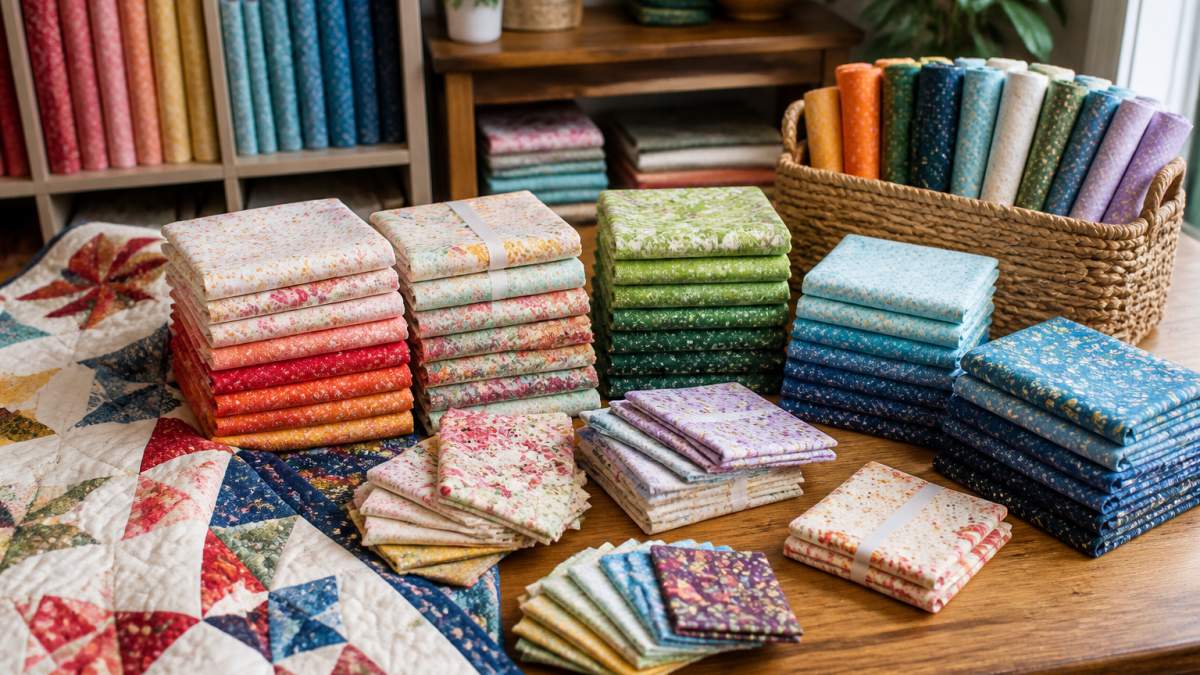
The standout trend this season is the integration of hand-dyed textures alongside conventional prints. Collections are mixing solid blenders with patterned pieces in ways that create visual depth without overwhelming the eye. Pre-cut options, fat quarters, charm packs, and jelly rolls, are expanding to include curated color combinations that take the guesswork out of fabric selection for newer quilters.
Fabric Weight and Drape Considerations for Spring/Summer Collections
Spring and summer collections typically feature lighter-weight quilting cotton (around 55-65 threads per inch), which reduces bulk in finished quilts and is easier to hand-quilt. However, lighter-weight fabrics require careful handling during piecing, they're more prone to shifting and fraying. Newer quilters should choose 65+ thread count for more forgiveness.
Lower thread counts drape more softly and help finished quilts breathe better in humid conditions, an advantage for spring and summer projects.
Organic Cotton and Color Fastness in Warm Climates
Organic cotton is now standard in many collections. For spring and summer quilts, organic cotton's slightly looser weave allows better water penetration during washing, helping remove residual dyes more effectively.
Color fastness has improved noticeably. Collections with low-impact dyes sometimes show slightly less color fastness than conventional dyes, though the difference is minimal. Pre-wash spring collection fabrics in cool water before cutting, particularly reds, deep blues, and dark greens.
Design Strategy: Blender-to-Print Ratios
The best spring and summer collections pair bold prints with neutral blenders in a deliberate ratio: roughly 40-50% blenders or solids to 50-60% patterned pieces. This ratio gives flexibility to create visual impact without overwhelming the design.
Fall 2026 Fabric Trends and Design Directions
Fall 2026 quilting fabric trends feature deeper, more saturated color palettes: rich jewel tones, deep teals, burgundies, and forest greens paired with warm metallics and earth-tone accents.
Design emphasizes "visual texture", patterns that create dimension through layering and scale variation, giving quilters more creative control over their projects.
Bali batiks are now integrated as core collection elements rather than novelty accents, with hand-dyed aesthetics replicated convincingly through advanced dyeing techniques across price points.
Collections highlighting organic cotton, low-impact dyes, or ethical production practices are gaining shelf space as quilters actively seek environmentally responsible fabrics.
Best Fabric Brands for High-Thread-Count Quilting Cotton
Thread Count Standards and What They Mean for Your Projects
Thread count refers to threads woven per square inch. For quilting, 60-80 threads per inch balances durability with workability, holding seams securely and resisting fraying.
The sweet spot for most quilters is 65-75 threads per inch, providing excellent durability without compromising ease of use. Higher thread counts can be harder to needle and may shift during piecing.
Two fabrics with identical thread counts can perform differently based on fiber quality and weave tightness. A loosely woven 70-thread-count fabric will fray more readily than a tightly woven one.
When evaluating quilting fabric collections, ask about cotton grade (longer staple fibers create stronger fabric), pre-shrinking, and selvage consistency. These details separate premium quilting cotton from budget alternatives.
Organic Cotton and Sustainable Certifications
Organic cotton quilting fabrics are now mainstream collection staples, grown without synthetic pesticides or fertilizers.
Performance differences between conventional and organic quilting cotton are minimal. Look for GOTS (Global Organic Textile Standard) or similar recognized certifications.
Sustainable practices extend beyond organic cotton to include low-impact dyes and ethical labor practices, reflecting the values of conscious consumers.
Quilting Fabric Trends 2026: Color, Pattern, and Texture
Color palettes in 2026 are rejecting the safe middle ground. Collections are either embracing bold, saturated hues or committing fully to neutral, monochromatic schemes. The fence-sitting pastels that dominated recent years are giving way to confidence in color choice.
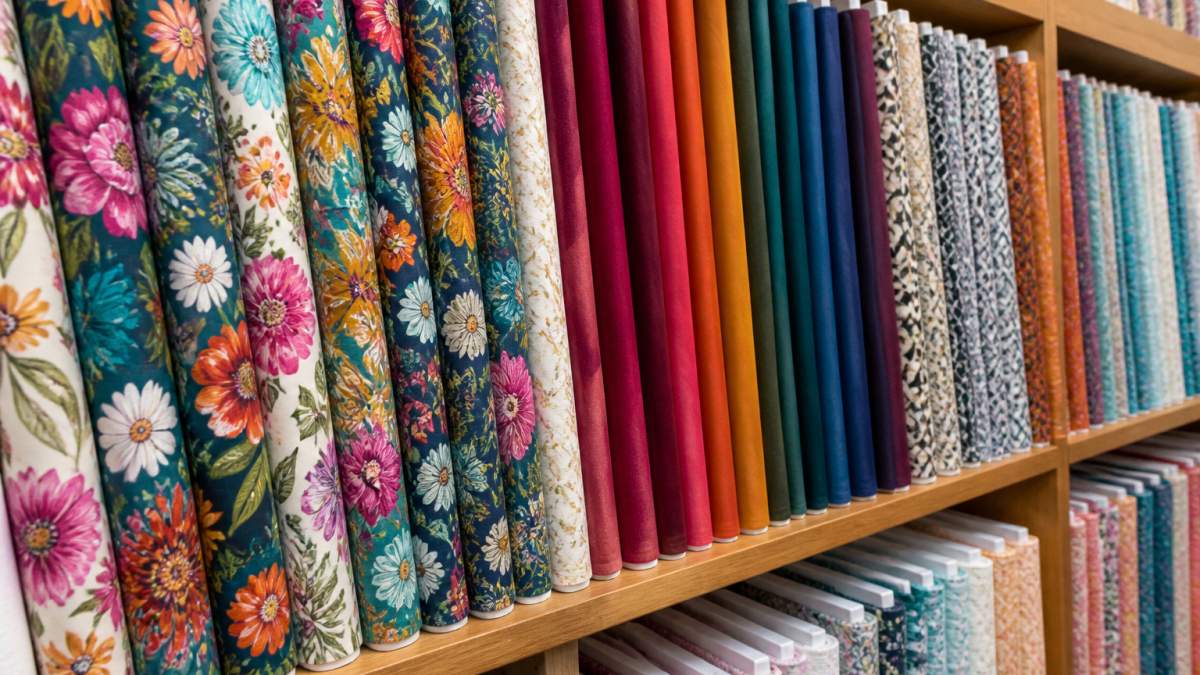
Maximalist Florals and Bold Color Blocking
Maximalist florals are dense, layered botanical compositions featuring overlapping flowers, foliage, and intricate details that command attention.
Color blocking pairs bold florals with solid companion fabrics in coordinating or contrasting hues, simplifying project planning while allowing bold visual statements.
Maximalist florals succeed when paired with adequate blenders and solids. The best 2026 collections offer roughly 60% patterned pieces and 40% blenders or solids.
Hand-Dyed Textures and Bali Batiks
Hand-dyed aesthetics create organic variation and depth through subtle shifts in tone and saturation, making pieced blocks appear more dimensional.
Bali batiks have become a staple in quilting fabric collections, offering authentic hand-dyed appearance with the consistency of industrial production. True batik involves wax-resist dyeing, but modern quilting batiks use advanced printing techniques to replicate the look. The result is fabric that feels special without the unpredictability of actual hand-dyeing.
Texture blenders, fabrics with subtle tonal variation or tone-on-tone patterns, serve as the bridge between bold prints and solids. A well-designed collection includes several texture options that allow quilters to add visual complexity without overwhelming their projects.
Budget vs. Premium Fabric Collections: What You're Paying For
Budget quilting fabric collections typically feature simpler designs, lower thread counts (50-60 per inch), and less rigorous quality control. They work perfectly well for many projects, especially for newer quilters experimenting with design. The trade-off is durability and design sophistication.
Premium quilting fabric collections invest in higher thread counts (70-80 per inch), more complex design development, and better cotton sourcing. Premium fabrics often include organic or sustainably-sourced options as standard rather than specialty lines. The color fastness and seam integrity tend to be superior.
What you're actually paying for in premium collections isn't always obvious. It's the designer's expertise, the investment in high-quality printing plates, the cost of better cotton, and the resources devoted to quality testing. A premium collection might feature hand-dyed textures that required months of development to achieve the right aesthetic.
Mid-range collections represent a practical sweet spot for many quilters. They offer good thread counts, thoughtful design, and solid performance without premium pricing. Many of the best-performing quilting fabric collections fall into this category, offering genuine value rather than budget or luxury positioning.
Matching Fabrics to Your Project: Blenders, Pre-Cuts, and Yardage
Successful quilting projects depend on understanding how different fabric types work together and which collections suit your specific technique. The fabric that excels in one quilting method may underperform in another, and understanding these trade-offs prevents costly mistakes.
Fabric Selection by Quilting Technique
Foundation Paper Piecing (FPP): This technique requires fabric with excellent stability and minimal shifting. Higher thread count fabrics (70-80 per inch) are ideal because they resist distortion when sewn to paper foundations. Tightly woven collections with minimal give perform best. Avoid very loose, drapey fabrics; they'll shift during the piecing process and create misaligned seams. Solid blenders and small-scale prints work better than large-scale designs in FPP, since you're working with small pieces and need to see where seams fall. Collections with good color contrast between pieces help you track your work more easily.
Appliqué: Appliqué benefits from slightly softer, more pliable fabric that turns edges smoothly.
Pre-Cut Formats and Their Best Uses
- Charm packs (5-inch squares): Ideal for small projects, baby quilts, or projects requiring many different fabrics. Limited for large-scale designs.
- Jelly rolls (2.5-inch strips): Perfect for strip-piecing projects and rail fence patterns. Less versatile for designs requiring varied piece sizes.
- Fat quarters (18 × 22 inches): The most versatile pre-cut. Suitable for small blocks, appliqué, or combining multiple fat quarters into larger pieces. Allows experimentation without bulk yardage commitment.
- Layer cakes (10-inch squares): Ideal for larger blocks and designs that require bigger pieces. Good for intermediate quilters with a specific project in mind.
Yardage Purchases and Stash Building
Scale and Proportion in Fabric Matching
Frequently Asked Questions
What new quilt fabric collections are coming out in 2026?
2026 brings bold maximalist florals, hand-dyed textures, and color-blocking designs to the forefront. Spring collections emphasize fresh pastels and botanical prints, while fall lines feature deeper jewel tones and earthy textures. Bali batiks and organic cotton blends are gaining prominence across major quilting fabric collections. Many designers are also introducing sustainable options with eco-certifications, responding to quilters' demand for environmentally conscious materials.
How do I choose high-quality quilting cotton for my projects?
Look for high-thread-count quilting cotton (typically 60-80 threads per inch for quality quilting fabric). Check the fiber content, 100% cotton is standard, but organic cotton offers durability and color fastness. Examine the print scale and color blocking to ensure patterns match your project vision. Test the fabric weight and drape by handling samples in person or requesting swatches. Premium fabrics hold their shape better during piecing and quilting, making them worth the investment for heirloom-quality projects.
What are the best fabric brands for high-thread-count quilting cotton?
Established quilting fabric brands consistently deliver superior thread count and color fastness. Look for collections featuring 100% cotton construction with tight, even weaves. Premium brands invest in sustainable dyeing processes and offer comprehensive color palettes designed by professional textile designers. When evaluating options, compare selvage quality, check for consistency in print alignment, and verify that the fabric maintains its integrity through multiple washings. Many top-rated quilting fabric collections offer sample packs so you can test quality before committing to yardage.
Where can I find the latest 2026 fabric releases and ensure they're in stock?
Specialty quilt shops with extensive inventory typically stock new collections as they release throughout the year. Online retailers with real-time inventory systems let you check availability before ordering. When shopping for specific quilting fabric collections, confirm stock status and ask about pre-order options for upcoming releases. Many shops offer nationwide shipping with reliable tracking, so you can access 2026 collections without traveling.