 blog
blog
Best Quilting Machine Brands for Pros
Table of Contents
- What Sets Professional Quilting Machines Apart
- Throat Space Requirements for Professional Quilting
- Key Specifications That Matter: SPM, Motor Power, and Stitch Quality
- Longarm Quilting Machine Reviews and Performance Comparison
- Quilting Machine Maintenance and Repair: Long-Term Durability
- Budget vs. Investment-Grade Machines: Total Cost of Ownership
- Choosing the Right Brand for Your Professional Work
- Frequently Asked Questions
Last Updated: October 1, 2026
What Sets Professional Quilting Machines Apart
Professional quilting machines differ fundamentally from consumer models in sustained use, precision, and workload capacity. They require industrial-grade components to deliver consistent stitch quality across hundreds of hours annually.
The core distinction lies in motor power, frame rigidity, and throat space. Professional machines provide expansive workspace, heavy-duty construction, and the ability to handle large quilting projects without performance degradation, a turning point in what's possible in your work.
Professional quilters logging 40+ hours weekly demand mechanical reliability that survives years of continuous operation. Professional-grade machines feature reinforced feed dogs, precision needle positioning, and motors engineered for sustained high-speed operation.
Ergonomics matter critically for extended work. Professional machines include presser foot pressure adjustment, knee lifter functionality, and workspace dimensions that prevent repetitive strain, details budget machines overlook.
Throat Space Requirements for Professional Quilting
Throat space, the distance from the needle to the machine's right edge, determines what size quilts you can complete and directly controls fabric clearance during stitching.
For professional work, throat space matters more than almost any other specification. Consumer machines offer 4-6 inches; professional machines typically provide 9-12 inches or more, allowing larger projects without constant repositioning.
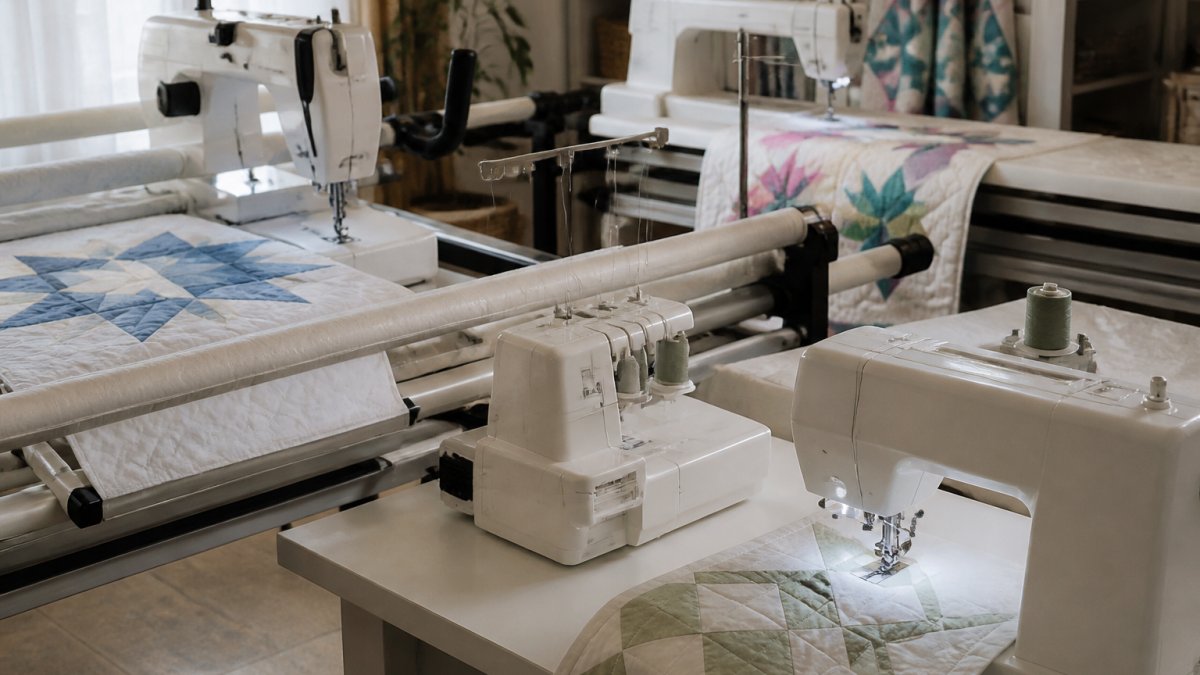
Longarm quilting machines operate in an entirely different category. These dedicated quilting systems feature 18-30 inches of throat space or more, allowing you to work on full-size quilts without moving the piece. If you're quilting regularly at professional volume, a longarm represents the ultimate investment in workspace and capability.
Workspace dimensions extend beyond throat space, overall machine footprint, table height, and surrounding clearance all affect efficiency. A machine with excellent throat space but poor table compatibility wastes that advantage.
If you're pursuing professional quilting as a serious business, investing in maximum throat space prevents future frustration and limitations.
Key Specifications That Matter: SPM, Motor Power, and Stitch Quality
Stitches per minute (SPM) reflects speed, but consistency matters more than raw speed. For professional quilters, the practical range is 800-1,500 SPM on domestic machines; longarm systems typically operate at 1,800-2,500 SPM. A machine maintaining steady speed under load outperforms one that fluctuates depending on fabric resistance.
Motor power directly impacts sustained performance. Consumer machines use 40-60 watt motors; professional domestic machines range from 80-120 watts; longarm machines employ 150+ watt industrial motors. A 60-watt motor running continuously for 6 hours generates heat buildup causing speed fluctuations and inconsistent stitches. A 100-watt motor maintains stable torque throughout extended sessions.
Professional machines maintain precise stitch length regardless of fabric thickness, speed changes, or batting density through precision feed dog design and stitch regulator functionality. Some machines include optical stitch sensors that detect stitch length and adjust motor speed in real time, preventing longer stitches in thicker batting sections.
Tension drift is the most common complaint among professional quilters. Professional machines offer tool-free tension adjustment with visual indicators and automatic tension compensation based on fabric thickness. Quick-access adjustment saves significant time across hundreds of quilts annually.
For custom quilting designs, you need feed dog drop capability, responsive presser foot control with minimal lag, and unrestricted hand movement. Professional machines feature presser foot pressure adjustment down to zero pounds and knee lifters that raise the presser foot without hand movement.
Tension balance should produce stitches that look identical on both sides of fabric. Professional machines maintain balance across different thread weights and fabric types. Test machines with your actual thread and fabric choices before purchase, as performance varies with specialty threads.
Longarm Quilting Machine Reviews and Performance Comparison
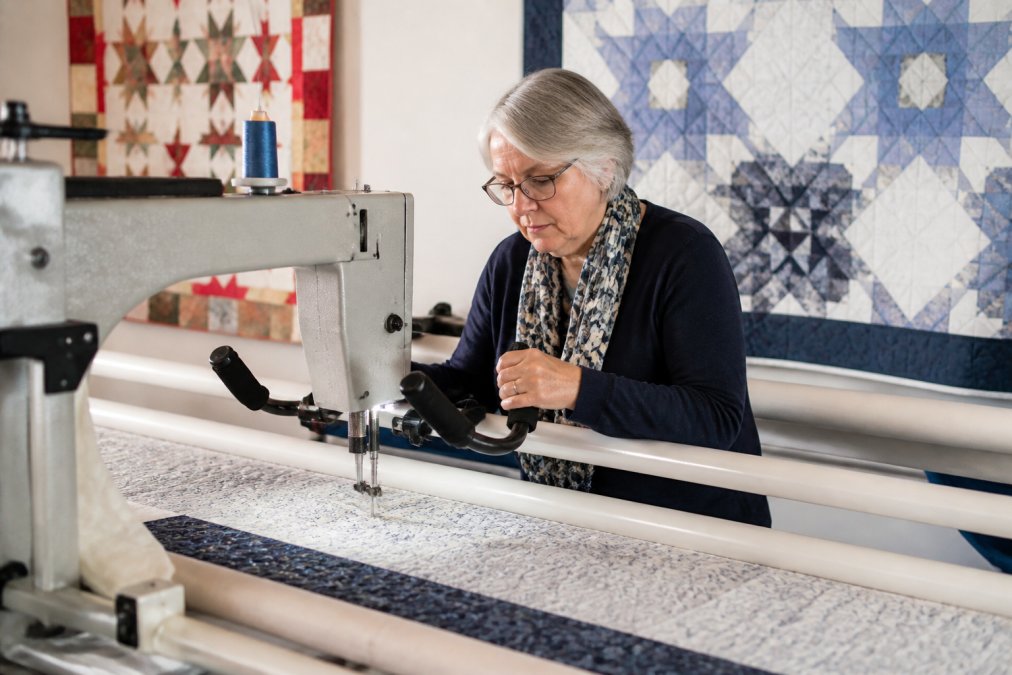
Longarm machines represent the professional standard for high-volume quilting. These systems mount fabric on a frame and move the quilting head across the surface, enabling superior control, faster production, and full-size quilt handling without repositioning.
Frame compatibility and setup time are critical. A machine requiring 15 minutes to thread differs drastically from one requiring 45 minutes, time differences accumulate significantly over hundreds of quilts annually.
Longarm systems reach 2,000+ SPM, substantially faster than domestic machines. Speed must pair with precision, the best systems combine high speed with stitch regulator technology maintaining consistent stitch length.
Maintenance requirements differ significantly across longarm brands. Some require monthly calibration; others maintain precision for extended periods. Understanding maintenance demands before purchase prevents costly downtime.
The Nebraska Quilt Company maintains certified repair services for major quilting machine brands. Access to qualified technicians reduces repair turnaround time and ensures machines stay production-ready.
Quilting Machine Maintenance and Repair: Long-Term Durability
Machines running 40+ hours weekly need systematic maintenance to prevent deterioration and ergonomic strain.
Preventive Maintenance Routines
Professional quilters establish weekly maintenance routines (15-20 minutes) including bobbin cleaning, lint removal, and thread path inspection. Professional machines feature removable covers and open designs making cleaning straightforward, while consumer models often require disassembly.
Needle quality and replacement frequency matter more than many quilters realize. Bent or dulled needles create tension problems, skipped stitches, and fabric damage. Professional quilters typically change needles every 8-16 hours of use, depending on fabric type and thread weight. This preventive approach costs far less than repairing damaged machines or reworking quilts. Using the correct needle type for your work, topstitching needles for heavier threads, microtex needles for precision free-motion work, prevents many tension and breakage issues.
Oil and lubrication specifications vary by machine type. Some models use self-lubricating components; others require periodic oiling at specific points. Using incorrect lubricants or over-oiling causes sticky mechanisms and attracts lint buildup. Always follow manufacturer specifications rather than assuming all machines need the same maintenance approach. Professional machines typically require oiling every 40-50 hours of use at designated points; some modern machines use sealed bearings that never require user-level oiling.
Tension calibration drifts over time as components wear. Professional machines typically require quarterly or semi-annual tension checks to maintain stitch consistency. This isn't a user-level adjustment; it requires professional service with calibration equipment. Having access to certified technicians prevents the frustration of unexplained tension problems. Having access to certified technicians prevents the frustration of unexplained tension problems.
Ergonomics for Sustainable High-Volume Production
Professional quilting differs fundamentally from hobby quilting in duration and intensity. A professional quilter working 40+ hours weekly faces repetitive strain risks that casual users never encounter. This makes ergonomic setup as critical as machine specifications, yet it's rarely discussed in quilting machine guides.
Table height directly affects shoulder, neck, and wrist strain. The optimal height positions your elbows at 90 degrees when hands rest on the machine bed, with forearms parallel to the floor. Most standard sewing tables are 28-30 inches high, which works for average-height quilters but creates strain for taller or shorter practitioners. Professional quilters often invest in adjustable-height tables or custom stands that position machines at individual optimal heights. Working at incorrect table height for 40 hours weekly creates cumulative strain that leads to tendonitis, carpal tunnel syndrome, and chronic pain.
Chair support matters as much as table height. Sitting for extended quilting sessions requires a chair with lumbar support, adjustable seat height, and armrests positioned to support forearms without restricting machine access. Many professional quilters use ergonomic office chairs rather than standard quilting stools, recognizing that proper back support prevents the lower back pain common among high-volume quilters. The chair should allow feet to rest flat on the floor with knees at 90 degrees when seated at your machine.
Repetitive motion prevention requires intentional breaks and movement variation. Professional quilters should incorporate 5-10 minute breaks every hour to stand, stretch, and move differently. Alternating between piecing and quilting work, or between free-motion and straight-line quilting, uses different muscle groups and reduces strain on any single area. Some professionals use hand exercises and stretches specifically designed for quilters to maintain flexibility and prevent injury.
Machine positioning within your workspace affects ergonomics significantly. Machines positioned too far away require reaching and shoulder extension; machines positioned too close create cramped hand positions. The ideal position allows your hands to rest naturally on the fabric with minimal arm extension.
Long-Term Durability and Repair Economics
Budget vs. Investment-Grade Machines: Total Cost of Ownership
The initial purchase price tells only part of the cost story. Professional quilting requires calculating total cost of ownership across maintenance, repairs, downtime, and productivity.
Choosing the Right Brand for Your Professional Work
Professional quilting demands equipment from manufacturers with proven track records in durability and support. Brands that specialize in professional-grade machines invest in engineering, testing, and customer service in ways that consumer-focused manufacturers don't.
Frequently Asked Questions
What features define a professional-grade quilting machine?
Professional quilting machines combine industrial-grade motors, larger throat space (typically 10 inches or more), precision stitch regulators, and heavy-duty construction. They handle continuous high-volume work with consistent stitch quality, offer free-motion capabilities, and maintain tension accuracy across different fabric weights. Most also feature automatic thread cutters, knee lifters, and durable metal chassis rather than plastic components, ensuring reliability through years of intensive use.
How do longarm quilting machine reviews help you choose the right brand?
Longarm quilting machine reviews reveal real-world performance data: stitch consistency under heavy use, motor reliability, frame compatibility, and customer support quality. Professional reviews assess how machines handle piecing speed, fabric clearance, and whether they maintain precision stitching over extended sessions. Reading detailed reviews helps you understand which brands excel at specific tasks, whether you need speed for production work or accuracy for intricate designs, and identifies common maintenance issues before investing.
Why is throat space so critical for professional quilting work?
Throat space determines the maximum fabric width you can quilt without repositioning, directly affecting productivity and design possibilities. Professional quilters need at least 9-10 inches of throat space to handle standard quilt widths efficiently and accommodate larger quilting projects without constant adjustments. Insufficient throat space forces you to stop frequently, reduces precision stitching capability, and limits the complexity of designs you can execute. This single specification often determines whether a machine suits professional production work.
Should professional quilters invest in computerized or mechanical quilting machines?
Computerized machines offer stitch length consistency, programmable patterns, and reduced operator fatigue, valuable for high-volume production. Mechanical machines provide direct control, lower maintenance complexity, and often greater reliability for basic work. Most professionals choose based on their specific workflow: computerized machines excel for repetitive designs and precision work, while mechanical machines suit custom, free-motion quilting. Consider your primary projects, budget for repairs, and whether integrated digital quilting software matters to your business model.
Choosing professional quilting equipment represents a significant investment in your craft and business. The right machine amplifies your productivity, reduces frustration, and creates the foundation for years of reliable work. Visit Nebraska Quilt Company to explore professional-grade quilting machines, discuss your specific needs with certified technicians, and discover how the right equipment transforms your quilting practice.