 blog
blog
Best Sewing Machine for Beginner Quilters: 2026 Guide
Table of Contents
- What Beginner Quilters Actually Need in a Sewing Machine
- Essential Quilting Tools for Beginners Beyond the Machine
- Mechanical vs Computerized Sewing Machines for Quilting
- Must-Have Sewing Machine Feet for Quilting
- Noise, Vibration, and Ergonomics: What Reviews Skip
- New, Used, or Refurbished: Where Beginner Quilters Should Buy
- Warranty and Local Repair Access Before You Buy
- Frequently Asked Questions
Last Updated: September 30, 2026
What Beginner Quilters Actually Need in a Sewing Machine
The best sewing machine for beginner quilters prioritizes throat space, reliable stitch control, and a quarter-inch seam over flashy stitch counts. At Nebraska Quilt Company, we've watched thousands of new quilters choose their first machine, and the features that matter most are rarely the ones on the box.
Most beginners compare stitch variety. What actually determines whether you finish your first quilt is whether the machine lets you piece accurately and quilt without fighting the fabric.
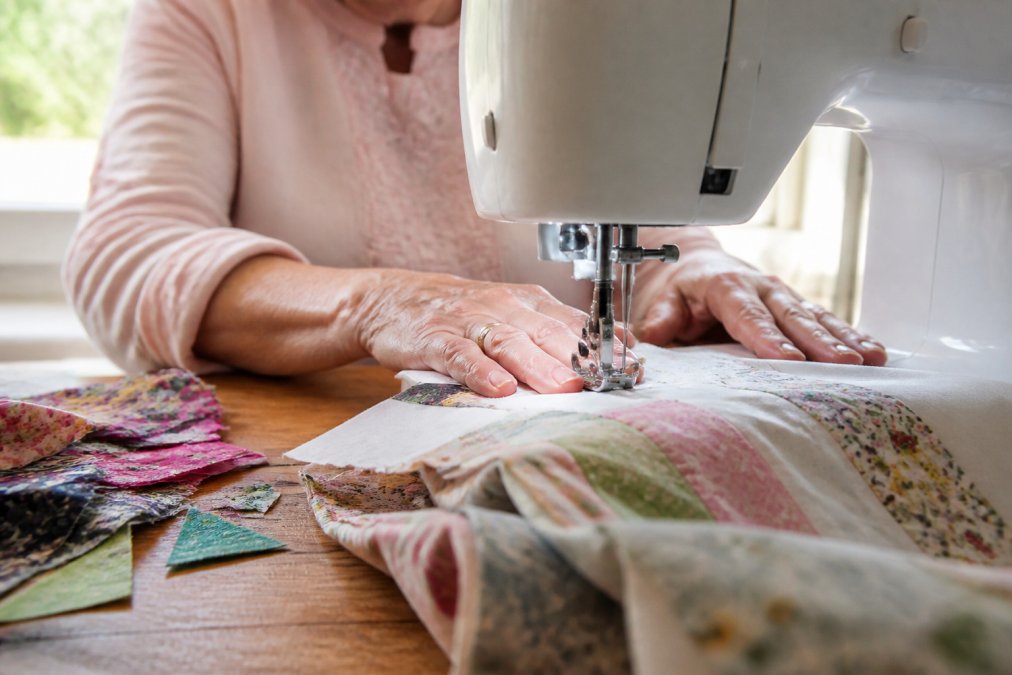
Throat Space and the Quarter-Inch Seam
Throat space is the distance between the needle and the right side of the machine body. Standard machines offer around 6 to 7 inches, while quilting-focused models push past 9 or 10 inches.
That extra room matters when you roll a quilt top through the machine.
Stitch Length, Width, and Feed Dog Control
For piecing, you want a straight stitch with adjustable stitch length, usually set between 2.0 and 2.5 mm. For free motion quilting, you need the ability to drop the feed dogs so you control fabric movement by hand.
Essential Quilting Tools for Beginners Beyond the Machine
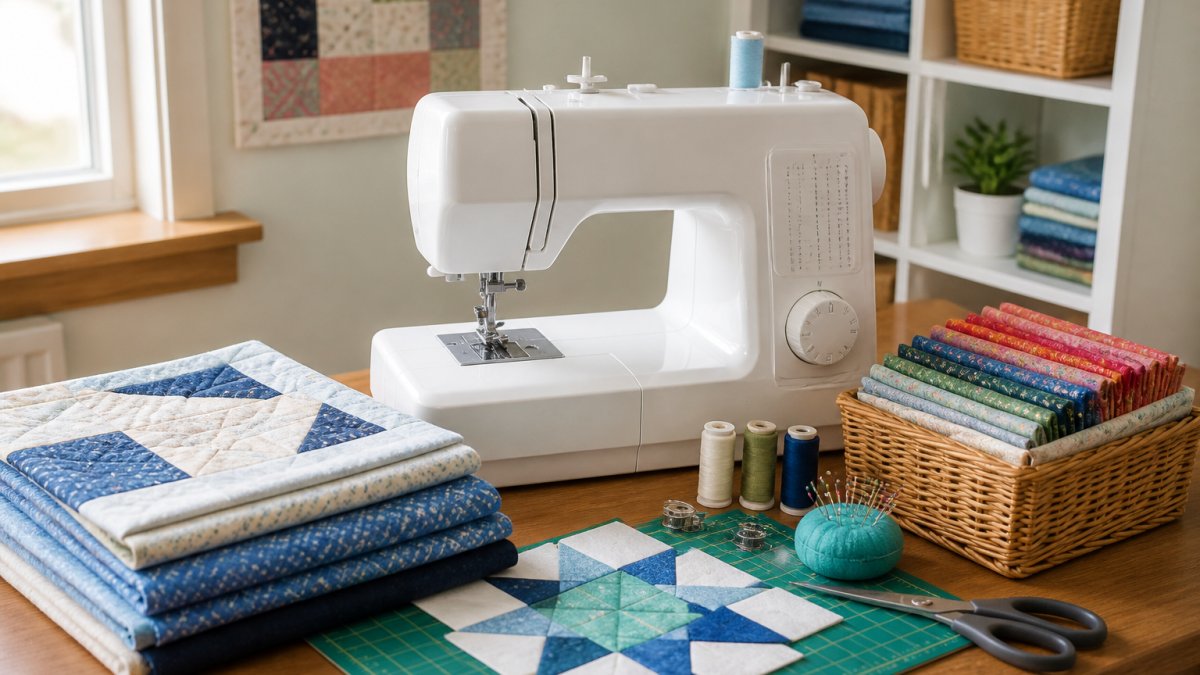
The machine is roughly half your starting kit. The rest turns a sewing machine into a quilting setup, and skipping these items is the most common mistake we see.
- Rotary cutter and self-healing mat: Faster and more accurate than scissors for cutting strips and squares
- Acrylic quilting ruler: A 6x24 inch ruler handles most strip cutting and squaring
- Walking foot: Feeds top and bottom fabric layers together so they don't shift
- Darning foot: Required for free motion quilting once you drop the feed dogs
- Quarter-inch piecing foot: Keeps your seam allowance consistent across every block
- Basting pins or spray: Holds the quilt sandwich together before quilting
- Quality thread and bobbins: Match thread weight to your project; keep spare bobbins wound
Mechanical vs Computerized Sewing Machines for Quilting
Mechanical and computerized machines both quilt well. The difference comes down to how much you want the machine to handle, how much you want to spend on electronics, and how you feel about repair when something fails.
When a Mechanical Machine Makes More Sense
A mechanical machine uses dials and levers to set stitch length, width, and tension. There's no screen, no circuit board, and far fewer parts to fail, though stitch selection is limited to the built-in cam stack or fixed set.
When a Computerized Machine Earns Its Price
A computerized machine uses stepper motors and a control board to move the needle and feed dogs, enabling the features beginners notice most:
- Needle up/down positioning, the machine stops with the needle in the fabric or out of it, so you can pivot without hand-wheeling.
- Stitch memory and presets, you save your quarter-inch piecing settings and recall them instantly.
- Automatic thread cutter, trims top and bobbin threads at the push of a button, which saves real time across a full quilt.
- Automatic needle threader, genuinely useful if your eyesight or hand steadiness is a factor.
- Speed control slider and start/stop button, lets you run the machine without the foot pedal, which is steadier for free motion work and easier on your back.
The Repair Trade-Off Nobody Prices In
The trade-off is cost and specialized repair. A mechanical machine with a broken belt is a straightforward fix; a computerized machine with a failed control board may need a model-specific replacement costing a meaningful fraction of the purchase price, and the board may no longer be manufactured after a few years.
| Feature | Mechanical | Computerized |
|---|---|---|
| Stitch settings | Dials and levers | On-screen presets |
| Needle threader | Manual | Often automatic |
| Thread cutter | Manual | Often automatic |
| Needle up/down | Hand wheel | Button or preset |
| Stitch memory | None | Yes |
| Repair cost | Lower, widely serviceable | Higher, board-dependent |
| Parts availability | Broad and long-lived | Model-specific, can lapse |
| Best for | Simple piecing, tight budgets, learning fundamentals | Frequent quilting, complex patterns, reduced fatigue |
A Practical Way to Decide
Federal Trade Commission guidance on written warranties and what they must disclose
Must-Have Sewing Machine Feet for Quilting
The walking foot is the single most important attachment for beginner quilters. Its built-in upper feed dogs move in sync with the machine's lower dogs, carrying the top fabric layer at the same rate as the bottom. Without it, the top layer feeds slower, causing puckers, pleats, and shifted seams, the gap between a flat finish and a rippled one on a full-size quilt.
Shank Type Decides What Fits
What most guides skip is that feet are machine-specific, and the deciding factor is the shank, the metal bar the foot attaches to. There are three common types:
- Low shank: The most common type on home machines. The presser bar is short, and the foot screws onto it from the side.
- High shank: Found on many industrial-style and some higher-end home machines. The bar is longer, and low-shank feet will not reach the needle plate correctly.
- Slant shank: Used on certain vintage and modern machines where the needle bar sits at an angle. Standard feet will not align.
Presser Foot Pressure: The Adjustment Nobody Mentions
Presser foot pressure controls how hard the foot presses fabric against the feed dogs. Too much drags a thick quilt sandwich and distorts stitches; too little lets fabric slip. Most machines have a dial or screw on the head to adjust it, backing the pressure off slightly when moving from piecing thin cotton to quilting a layered sandwich is often the difference between smooth feeding and fighting the machine.
What to Expect to Pay
A basic walking foot for a low-shank home machine is a modest accessory purchase, while a quarter-inch piecing foot is usually one of the least expensive feet you'll buy. Open-toe and specialty feet sit higher. None are large expenses individually, but they add up, which is why bundling at the point of machine purchase is the practical move.
Noise, Vibration, and Ergonomics: What Reviews Skip
Machine noise and vibration rarely appear in spec sheets, but they shape whether you enjoy quilting or dread it, a machine that rattles on every stitch is exhausting over a three-hour session.
New, Used, or Refurbished: Where Beginner Quilters Should Buy
A new machine from a dealer you trust is the safest first purchase: you get a warranty, a setup walkthrough, and someone to call when something goes wrong.
U.S. Consumer Product Safety Commission guidance on product warranties
Warranty and Local Repair Access Before You Buy
Warranty terms and repair access decide how painful ownership becomes. A great machine with no service nearby turns a small problem into a shipping headache.
Ask three questions before you buy:
- What does the warranty cover, and for how long?
- Is there a certified technician within reasonable driving distance?
- What's the typical turnaround for a tune-up or repair?
Frequently Asked Questions
What features are essential in a sewing machine for beginner quilters?
Look for at least 6 to 8 inches of throat space, adjustable stitch length and width, a walking foot or darning foot, and a needle threader. A speed control slider and start-stop button help new quilters manage stitch pace without the foot pedal. Feed dog drop is needed for free motion quilting. These features cover piecing, quilting, and basic maintenance as your skills grow.
Are mechanical or computerized sewing machines better for learning to quilt?
Mechanical machines have fewer settings and cost less to repair, which suits quilters who want direct control. Computerized machines offer stitch variety, automatic thread cutters, and needle position memory that reduce mistakes on complex patterns. Beginners who plan to quilt regularly often prefer computerized models for the repeatability. Those who quilt occasionally may find a mechanical machine simpler to learn on.
How much should a beginner spend on their first quilting machine?
Nebraska Quilt Company does not publish prices online, so contact them directly for current pricing on specific models. Budget for essential quilting tools like a rotary cutter, cutting mat, and acrylic ruler, which add to the total startup cost.
Do I need a specialized quilting machine as a beginner?
A standard sewing machine with a walking foot and enough throat space handles most beginner quilting projects. Specialized quilting machines and longarm frames become worthwhile when you are quilting large bed-size projects regularly. Start with a versatile machine that also sews garments and home decor. Upgrade to a dedicated quilting setup once you know your preferred quilting style.
Choosing your first quilting machine comes down to matching features to how you'll actually sew, not chasing the longest feature list. Nebraska Quilt Company carries machines from brands we're certified to service, backs every purchase with on-site repair, and offers beginner classes that assume no prior experience. If you want a machine that fits your hands, your table, and your budget, start shopping with us and let our team walk you through the options.