 comparison
Is Expensive Quilting Fabric Worth It? A 2026 Guide
Table of Contents
- What Makes Expensive Quilting Fabric Cost More
- Quilting Fabric Quality: What You Actually Get
- Budget Fabric for Quilting: Trade-offs You Should Know
- How to Choose Quilting Fabric: A Practical Framework
- Premium Versus Budget Fabric: Direct Comparison
- Cost Per Finished Quilt: What Really Matters
- When Premium Fabric Is Worth the Investment
- Conclusion
- Frequently Asked Questions
Last Updated: October 8, 2026
What Makes Expensive Quilting Fabric Cost More
When you're standing in front of two bolts of fabric, one priced at $8 per yard and another at $14, the question isn't just about money. It's about what you're actually buying.
High-end fabric starts with better raw materials. Premium cotton farmers and textile mills invest in growing and processing cotton that meets strict standards. The fiber length, consistency, and purity all affect the final product.
The dyeing and printing process separates budget from premium fabrics too. Expensive fabrics use more sophisticated dye techniques that set color deeper into the fiber. Budget fabrics often use surface dyes that fade or bleed more easily.
Thread count plays a role in cost. Premium quilting cottons typically have higher thread counts, meaning more threads per inch in both directions. This creates a tighter weave that holds its shape better and resists fraying.
Labor and overhead add to the price too. Companies producing premium fabric often invest in quality control, testing, and certifications. They may also offer better customer service and easier returns.
Quilting Fabric Quality: What You Actually Get
The word "quality" means different things depending on what matters for your project. Understanding the specific qualities you're paying for helps you decide whether premium fabric is worth it for you.
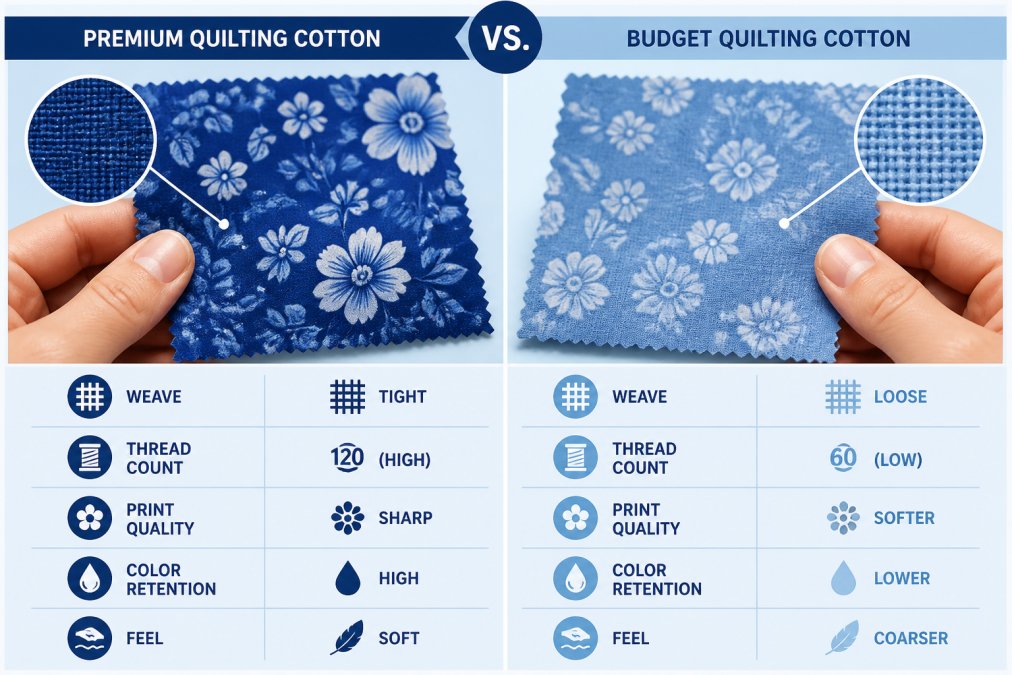
Thread Count and Weave Structure
Premium quilting fabrics typically feature higher thread counts than budget alternatives. A high-quality quilting cotton might have 60-80 threads per inch, while budget fabrics often run 40-50 threads per inch. More threads create a denser weave that resists fraying, holds piecing seams better, and maintains its shape through washing and use.
The weave structure affects how the fabric behaves. A tight plain weave (the most common for quilting cotton) creates stability. Some premium fabrics use sateen weaves that add sheen and drape. The structure also influences how easily you can needle-turn appliqué or hand-quilt through the fabric.
Budget fabrics with looser weaves can work for quilting, but they require more careful handling. Seams may fray more during piecing. The fabric may stretch or distort during quilting, especially with dense stitch patterns.
Colorfastness and Dye Stability
One of the biggest practical differences between expensive and cheap quilting fabric is how well colors hold. Premium fabrics are dyed with processes that bond color molecules deep into the fiber. These colors resist fading from light exposure and washing.
Budget fabrics often use surface dyes or cheaper dyeing methods. Colors can bleed into adjacent fabrics during the first wash. They fade faster when exposed to sunlight. For a quilt you plan to use and wash regularly, this matters.
The risk with budget fabric is that a dark navy or deep red might bleed onto lighter fabrics in your quilt. This happens more often with reds, purples, and dark colors. Some quilters accept this risk for the cost savings. Others find it unacceptable because it ruins the finished quilt.
Print Quality and Color Vibrancy
Premium fabric manufacturers invest in printing technology that delivers crisp, vibrant prints. Colors appear true to the design. Registration, the alignment of multiple colors, stays precise. Details in the print remain sharp and clear.
Budget prints often lack this precision. You might notice colors that look slightly muted or bleeding into each other. Fine details in the design can blur. Registration issues mean the pattern doesn't line up perfectly where colors meet.
For a traditional quilt using solid colors or simple prints, this difference may not matter much. For a modern quilt where print clarity affects the overall design, premium fabric delivers noticeably better results.
Budget Fabric for Quilting: Trade-offs You Should Know
Budget fabric can absolutely work for quilting. Many quilters use it successfully, especially for certain projects. Understanding the trade-offs helps you make an informed choice.
The main advantage of budget fabric is obvious: cost. You'll spend significantly less per yard, which matters when a large quilt requires 8-10 yards of fabric. For a beginner learning to quilt, this lower investment makes sense.
Budget fabric also comes in a wide variety of prints and colors. You're not limited to premium brands. Many designs appear in budget fabric before, or only, in budget lines.
The trade-offs are real, though. Budget fabric requires more careful handling during piecing. Seams may need reinforcement. The fabric can stretch or distort during quilting, especially if you're quilting densely. After washing, budget fabric may look less crisp and vibrant. Colors fade faster.
For a decorative wall quilt that won't be washed often, budget fabric works fine. For a baby quilt that will be washed weekly, or a bed quilt you'll use for years, the durability issues become more apparent.
How to Choose Quilting Fabric: A Practical Framework
Deciding between premium and budget fabric comes down to answering a few specific questions about your project and your priorities.
Assess Your Project Type and Timeline
Start by defining what you're making. A quick decorative quilt for a gift has different requirements than a heirloom quilt you plan to use for decades. A wall quilt that hangs in your living room won't face the same wear as a bed quilt.
Consider how often the finished quilt will be used and washed. A baby quilt gets washed constantly. Budget fabric may not hold up. A wall quilt rarely gets washed. Budget fabric is perfectly fine.
Think about the complexity of your design. A simple pattern with solid colors doesn't demand premium fabric. A complex design where print clarity matters might benefit from premium fabric's sharper prints.
Timeline matters too. If you're quilting on a deadline, budget fabric's potential handling issues might slow you down. If you have time to work carefully around its quirks, budget fabric is manageable.
Test Fabric Before Committing
Before buying yards of fabric, test it. Most quilters have scraps from previous projects. If you don't, buy a fat quarter, a quarter-yard cut that costs just a few dollars. Piece it into a small block. Quilt through it. Wash it.
This test tells you how the fabric behaves. Does it fray excessively? Does it hold its color through washing? Does the print stay sharp? Does it stretch or distort when you quilt through it?
For expensive quilting fabric, this test confirms you're happy with the quality before committing to 8 yards. For budget fabric, it shows you whether the trade-offs are acceptable for your specific project.
Premium Versus Budget Fabric: Direct Comparison
Here's how premium and budget quilting fabric stack up across the factors that actually matter to quilters.
| Factor | Premium Fabric | Budget Fabric |
|---|---|---|
| Thread Count | 60-80 per inch | 40-50 per inch |
| Colorfastness | Excellent; resists fading and bleeding | Fair to good; may bleed or fade faster |
| Print Clarity | Sharp, vibrant, precise registration | Softer focus; possible registration issues |
| Durability | Holds up well through repeated washing | May pill or wear thin with heavy use |
| Cost Per Yard | Higher starting price | Significantly lower cost |
| Handling During Piecing | Stable; minimal fraying | Requires careful handling; more fraying |
| Best For | Heirloom quilts, frequent use, complex designs | Practice projects, wall quilts, budget-conscious makers |
The comparison shows that premium fabric excels at durability and quality consistency. Budget fabric wins on cost and design variety. Neither is universally "better", it depends on your priorities.
Cost Per Finished Quilt: What Really Matters
Many quilters focus on the per-yard price difference and miss the bigger picture. A $6 difference per yard sounds significant until you calculate the total cost of your finished quilt.
A typical bed quilt requires 8-10 yards of fabric. At $8 per yard versus $14 per yard, you're looking at $48-80 saved by choosing budget fabric. That's real money. But add in batting, backing, thread, and your time, and the fabric cost becomes a smaller percentage of the total investment.
More important than the absolute cost is the cost per use. A bed quilt you use every night for ten years costs less per use than a decorative quilt you look at once.
A quilt you never finish costs infinite dollars per use. Choosing fabric, whether premium or budget, matters less than actually completing the project. If budget fabric's lower cost means you're more likely to start and finish, that's the right choice.
When Premium Fabric Is Worth the Investment
Premium quilting fabric makes sense in specific situations where the extra cost delivers measurable value.
Invest in premium fabric when you're making a quilt as a gift for someone you care about. The recipient will notice and appreciate the quality.
Premium fabric is worth it for heirloom quilts you intend to keep and pass down. These quilts should look beautiful and last for generations. Premium fabric's superior colorfastness and durability support that goal.
Choose premium fabric when the design demands it. A quilt featuring intricate prints or a complex color story benefits from premium fabric's sharper prints and truer colors. The design shows up better.
Premium fabric also makes sense when you're learning advanced techniques. Hand-quilting, needle-turn appliqué, and other precision work are easier with stable, high-quality fabric. You'll see better results and develop better skills.
For your first quilt or a practice project, budget fabric is perfectly reasonable. You're learning, and the cost difference helps you justify the investment in your new hobby.
Conclusion
Is expensive quilting fabric worth it? The honest answer is: it depends on your project, your budget, and what matters most to you.
Premium quilting fabric delivers superior colorfastness, sharper prints, and better durability. It handles more easily during piecing and quilting. It holds its appearance through repeated washing and use. For heirloom quilts, gifts, and projects where quality matters, premium fabric is worth the investment.
Budget fabric works perfectly for practice projects, decorative wall quilts, and quilters watching their spending. It comes in excellent designs and colors. The lower cost makes quilting more accessible. The trade-offs, slightly less durability, potential color bleeding, softer print quality, are acceptable for many projects.
The best approach is to match your fabric choice to your project. Use premium fabric for quilts you'll treasure and use for years. Start shopping at Nebraska Quilt Company's fabric selection, where you'll find both premium options and budget-friendly choices, plus expert guidance from our team to help you choose the right fabric for your specific project.
Frequently Asked Questions
Is expensive quilting fabric better quality than cheap fabric?
Premium quilting fabric typically offers higher thread counts, superior colorfastness, and more consistent print quality. Budget fabric can still produce beautiful quilts, but may experience more shrinkage, color bleeding, or pilling over time. The difference becomes most noticeable after multiple washes and years of use. For heirloom quilts or pieces you plan to keep long-term, premium fabric often justifies its cost through durability and appearance retention.
How can you tell if quilting fabric is good quality before buying?
Check the thread count on the bolt label, quality quilting cotton typically runs 60-80 threads per inch. Examine the weave closely; a tight, even weave resists fraying and pilling. Test colorfastness by dampening a corner with water and pressing it against white fabric; quality dyes won't transfer. Feel the hand of the fabric; premium cotton feels smoother and more substantial. Buy a small cut first if possible to test how it behaves when cut, pieced, and washed.
Can you mix expensive and inexpensive fabric in the same quilt?
Yes, mixing price points is common and practical. Many quilters use premium fabric for focal pieces or borders and budget fabric for background blocks or backing. The key is consistency in fiber content, mix 100% cotton with 100% cotton. Watch for shrinkage differences; if budget fabric shrinks more than premium fabric, it may cause puckering. Test a small section before committing your whole project, especially if combining very different fabric weights or qualities.
When is it worth spending more on quilting fabric?
Premium fabric pays off for heirloom quilts, gifts you're investing significant time in, or projects using complex piecing that demands precision. It's also worth it if you're a beginner and want fabric that handles easily without excessive fraying. For practice projects, scrappy quilts, or pieces you don't expect to keep for decades, budget-friendly options work well. Consider your time investment too; if you're spending 40+ hours on a quilt, premium fabric makes sense to protect that effort.